Should broadcasters pay to protect the ‘stars’ of wildlife films?

A few weeks ago, I wrote about Discovery Channel’s reluctance to air the climate change episode of the Frozen Planet series–an episode they helped fund. I asked that we label this act ‘unsustainable nature filmmaking’ because Discovery had failed to use its bully pulpit to protect the species that feature heavily in its films. An opinion piece in the journal Science this week, penned by Oxford geography professor Paul Jepson and colleagues, takes this argument one step further and asks that broadcasters like Discovery make direct monetary contributions to protect the ‘stars’ of wildlife films:
We ask whether it is time..[for] media corporations
producing and commissioning nature-based
programming…[to] adopt PES [payment for ecosystem services] principles.
For those unfamiliar with the concept of ‘payment for ecosystem services’, this is basically the idea that the many benefits provided to us by nature have a monetary value and that corporations profiting off of those services should give a percentage of profits back to conservation efforts.
In the scheme proposed by Jepson and colleagues, broadcasters would voluntarily pay a percentage of profits on every DVD and video download sold. The money would go to NGOs and other organizations directly involved in the protection of wildlife, in particular, the charismatic megafauna that attract viewers and are often most affected by human encroachment and habitat destruction:
…without the effort
and expenditure of gov-
ernments, nongovern-
mental organizations (NGOs), and the public,
it is likely that there would be few “big draw”
species and landscapes to film outside a zoo
or studio. Much nature-based content is produced in places that have a cost to conserve…
In exchange, broadcasters would receive certification, a seal of approval, stating that profits from their program go to species protection:
…the message created by certification, that by watching this you are paying
for conservation, creates new opportunities
to engage audiences in conservation.
But wait, you might ask, isn’t this type of programming already helping wildlife just by existing? Doesn’t increased awareness of wildlife make people more likely to protect it? Jepson and colleagues say no:
There is little evidence to support such
claims, which are difficult to quantify.
Bousé suggests that wildlife films may
alienate viewers, discourage deeper engagement, and create unrealistic expectations of what can be experienced.
And as I outlined in my previous blog, when broadcasters don’t address the plight of the species featured in their films, they actually go a long way towards misinforming the public about the state of nature. (Incidentally, Discovery has backpedaled on its original position not to air the climate change episode, largely due to public outcry.)
I don’t know how realistic Jepson’s scheme is and its success will likely depend on the big players like BBC, Discovery, History, etc. seeing its benefit. But even a percentage of a percent of profits pumped back into conservation could make a huge impact. The Science piece reports that some of these films generate Hollywood-size revenues (without the overhead of movie star -size salaries):
The 2001 series Blue Planet
from the British Broadcasting Corporation
(BBC) was broadcast in 150 countries and
made £40 million (U.S. $62.5 million) profit,
and its 2006 successor, Planet Earth, was
the most watched cable event, reaching 65
million U.S. viewers. Also, the big-screen
film March of the Penguins (2005) made $127
million.
As an added enticement to broadcasters, I’d like to propose that certification be granted–with a break on fees–if they give more air-time to truly educational material aimed at bringing awareness to the plight of the endangered species who make wildlife films both financially successful and a pleasure to watch.
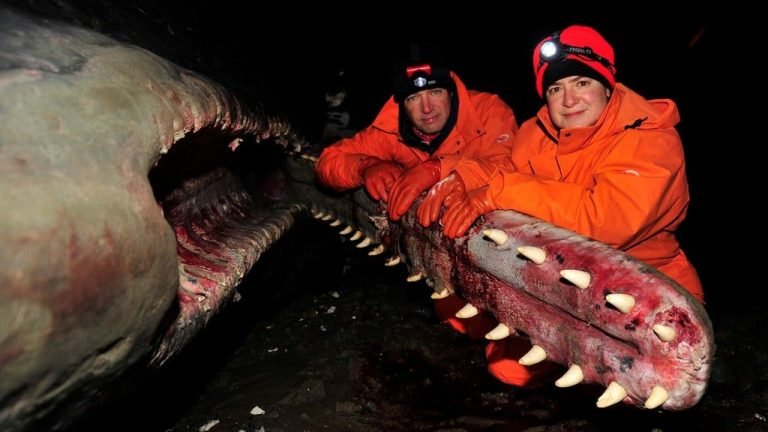
Photo courtesy of Terry Feuerborn via Flickr.com
References:
“Entertainment Value: Should the Media Pay for Nature Conservation?,” by P. Jepson; T. Hodgetts at University of Oxford in Oxford, UK; S. Jennings at Oxfam GB in Oxford, UK; K.E. Jones at Zoological Society of London in London, UK.